Key Points
- Check that your building has three-phase power for your heavy machinery.
- Confirm that your building has high enough ceiling heights.
- Look for a building that has a mixture of dock-high and drive-in doors.
- Verify if the floor can hold the weight of heavy tools used in industry.
- Pick a place close to major highways to save money on transportation.
Introduction
The choice of business location has a massive impact on its growth. If you want to set up your business for success, choose a location that fulfills the business’s needs. The location is not merely a space for manufacturing or storing items. It is a contributor to the company’s success.
The right industrial space in Norwalk for manufacturing businesses acts as a foundation for your success. If the space is too small, you cannot grow. If the layout is poor, your team wastes time moving materials. You must pick a place that works as hard as you do. You can also explore the future trends in commercial and industrial spaces.
Understand Your Power Requirements
Electricity will be your highest ongoing cost for a manufacturing business. You can’t run a massive CNC machine from a standard wall outlet. Check the electric panels before you sign a lease. You need to know if the building has three-phase power, as it is used for heavy-duty motors and industrial heaters.
Upgrading a building’s power can be very expensive. It often involves waiting months for the utility company to install new transformers. Always ask for the total amps available in the unit. If the power is too low, keep looking. Your industrial space for manufacturing must meet your energy needs on day one.
Clear Height and Vertical Volume
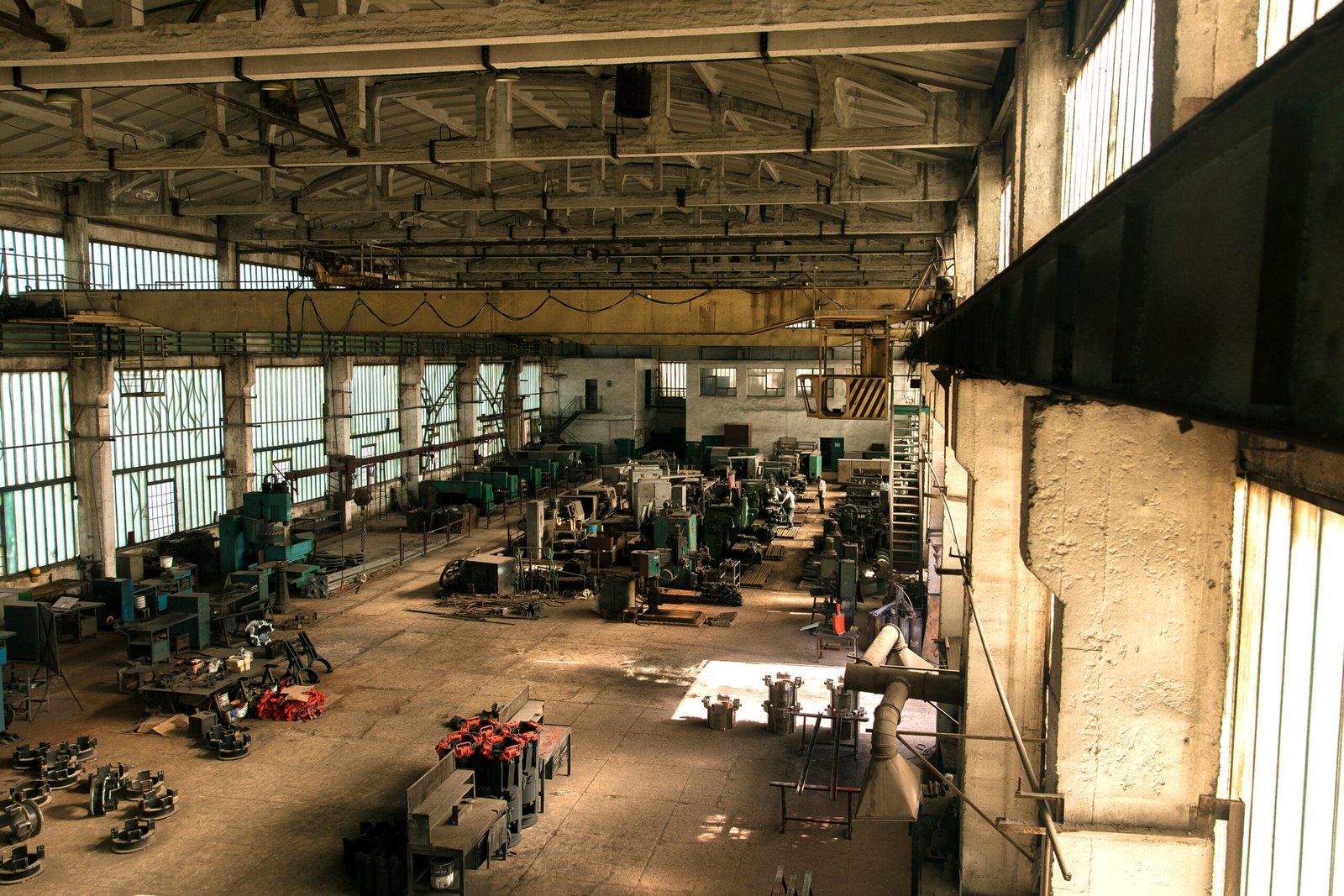
In the industrial world, we don’t just talk about square feet. The most important unit is cubic feet. It also covers the distance from the floor to the lowest hanging object, which can be a beam. Low ceilings are not ideal for many businesses.
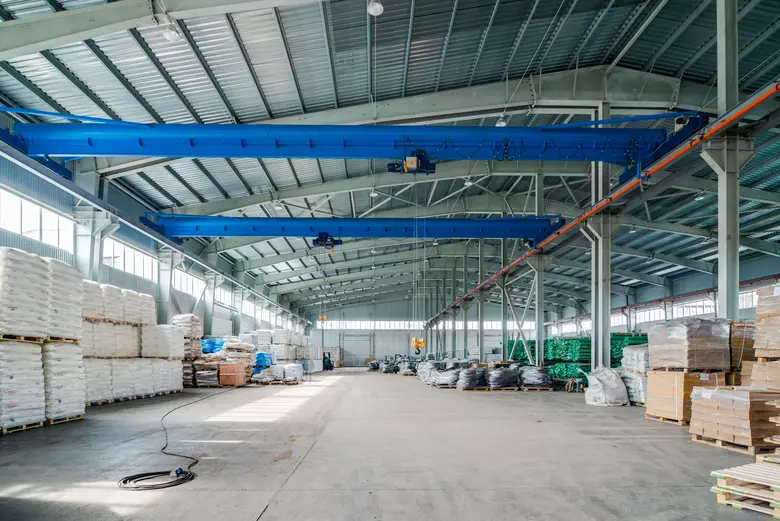
High ceilings allow you to stack your raw materials high on racks. This saves you from paying for a larger footprint. It also gives you room to install overhead cranes or ventilation systems. Business owners need at least 18 to 24 feet of height. This vertical space keeps your floor clear for assembly lines and movement.
Floor Load and Durability
Industrial machines are heavy. Vibrating presses and massive lathes put a lot of stress on the ground. Ask the contractors about the capacity the floor can handle. Industrial spaces usually have a floor made from concrete, as it offers good strength.
Sometimes, the concrete layer is too thin, and it cannot bear a heavy weight. The floor could crack due to heavy machinery. You will have to pay a massive amount for repairs. Businesses can stop working in such conditions. Ask the owners about the thickness of the slab, which should be at least six inches.
Logistics and Loading Docks
How do your goods get in and out? This is a vital question for any factory. You need a mix of loading options. Dock-high doors are great for semi-trucks. They allow a forklift to drive right into the trailer. Drive-in doors are better for smaller vans or moving equipment directly into the shop.
You should also consider the truck court. It is the space required for the trucks to turn around. It should be enough for large trucks. Your industrial zoning for manufacturing needs plenty of room for traffic. Smooth logistics prevent delays in your shipping schedule.
Zoning and Local Regulations
Every town has different rules for what you can make. Some areas allow light industrial work, like assembly or 3D printing. Other areas allow heavy industrial work, like chemical processing or metal casting.
Don’t assume you can operate your specific business in a building just because it resembles a warehouse. Consult the local zoning board in Norwalk or your exact city.
You should also check the fire safety strategies. The building should have a sprinkler system if you handle flammable materials. Making sure your manufacturing industrial space for rent is legal saves you from expensive shutdowns.
Climate Control and Ventilation
Some manufacturing processes create a lot of heat. Others require a very specific temperature to keep materials stable. Look at the HVAC system. Does the building have cooling, or just heat?
Ventilation is critical for the safety of your team. The system should expel the toxic fumes, which are produced during manufacturing. Good ventilation makes the team feel safe. It also prevents dust from settling on your finished products.
Location and the Labor Force
Your factory needs people. A manufacturing space very far from the city is not a good idea. It will be difficult to hire people there because they have to spend more on fuel. You may have to pay their fuel allowance. Pick a location near the city. It should be close to major roads and public transport.
Being near your suppliers cuts back the shipping expenses. If your raw materials have to travel across three states, your margins will shrink. A strategic location makes your entire operation more efficient.
Why 25 Van Zant is the Perfect Choice
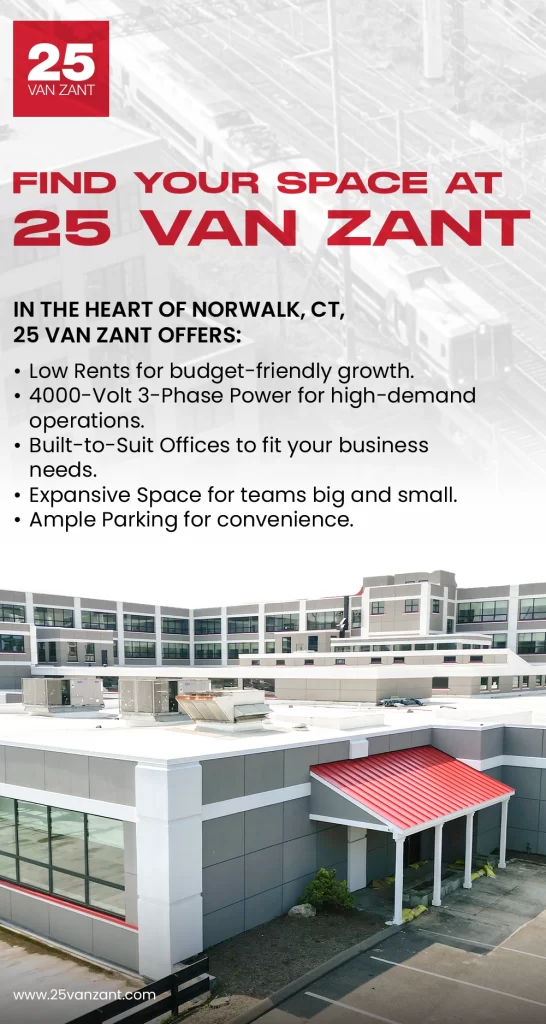
Are you looking for the ideal industrial space for lease in Norwalk, CT? Your search ends at 25 Van Zant. Our facility, a huge 250,000 square feet, is built for modern manufacturers. Your team can reach our building easily, as it is near the train station and I-95.
We have the modern infrastructure required for your brand’s growth. The space has high ceilings and strong floors to handle your big machinery. They can accommodate your largest equipment. You get access to the space 24/7, so you can work as per your convenience. Become part of a community of manufacturers who reside in our building. Contact now.
Frequently Asked Questions
What is the difference between manufacturing space and warehousing space?
Warehousing space requires less power because it is primarily used for storage. Manufacturing space requires a lot of power and reinforced floors for heavy-duty machinery.
What are the power requirements in a manufacturing unit?
The equipment you purchase will determine your power needs. Small factories typically require between 200 and 400 amps of three-phase power. Larger factories will require 800 amps of power or more. Make sure you calculate the peak load of your machines before you make a decision.
Can I ignore the clear height because I don’t require high racks?
High ceilings help with air circulation and heat dissipation. They also provide flexibility. Even if the height is not needed for you today, it may be needed for a future process change.