

Key Points:
- You should always pay attention to zoning laws for commercial spaces before leasing a space for your business.
- Zoning laws aren’t state-wide but are locally determined.
- You have to consult a professional to avoid any zoning mistakes while getting the right space.
Introduction
We can understand that, being a business owner, you can often overlook a very important aspect of leasing. And that is to know about the zoning laws for commercial spaces. But you have to keep in mind that this is a very important factor that helps in making the whole leasing process a lot easier.
Another problem that comes with these laws, people can’t properly understand them due to complex language. No more struggle with this when we are here to elaborate on everything related to them in an easy-to-understand language, so that you’ll benefit from it. To know more, you have to read this blog by the end, so you’ll never go blank while going through a difficult term regarding anything relevant.
What is Meant by Zoning Laws?
These are the local regulations that play an important part in defining how the buildings and land have to be used. These laws divide municipalities into certain defined districts, like commercial, residential, industrial, and even mixed-use. Also, keep in mind that all of these zones have special rules and regulations that permit or restrict some activities, how you can construct buildings, and also what the minimum standards are.
All of these laws have certain purposes:
- Guide orderly development: Prevent the use of incompatible lands that are next to each other.
- Protect property values: It also avoids the disruption of certain activities near the sensitive zoned areas.
- Better community welfare: By ensuring the services and infrastructure can support the commercial activities.
Types of Commercial Zoning in Connecticut
Although these aren’t similar for every town in this region, they do have similar patterns.
1. Neighbourhood Commercial
This type of Commercial zoning is best for small-scale commercial uses that serve the immediate communities, like salons, small offices, and corner shops.
2. General Commercial
These assist with a vast range of commercial uses like retail, offices, restaurants, and personal services.
3. Highway or Arterial Commercial
For the businesses that are located on highways, like motels, hotels, gas stations, and big retail centers, these zones are specifically designed.
4. Central Business District/ Downtown Zones
These are located within the big cities and towns like Norwalk, Hartford, etc. Such zones support entertainment, retail, and mixed-use, even most of the time, within the designed buildings and pedestrian standards.
Zoning Permits For Commercial Spaces
There are certain zoning permits for commercial spaces. Let’s have a look at them in depth.
What is a Zoning Permit?
You can name this a certificate or approval for compliance with zoning, which ensures the verification of your proposed use with the local regulations accordingly.
Who Needs It?
Anyone who needs construction, expansion, change of use, or any alterations to the zoning permits.
Some important points to pay attention to:
- This permit contrasts with the rest of the building permits; even where the construction complies with the building code standards, it may be in violation of the zoning.
- If you fail to obtain the permit, you have to pay fines, or the work can be stopped.
- Zoning officers can interpret the regulations, and then the interpretations can tell you about which information should be submitted.
Mistakes Businesses Make and How to Avoid Them?
Mostly, people talk about the mistakes only, but fail to give the solutions. But here we’ll be talking about the solutions in depth alongside mistakes.
Assuming that the Zoning is Statewide
No, it’s not true. Zoning isn’t statewide; rather, it’s just limited to local areas. It’s easy to understand that what’s allowed in Hartford may not be permitted in Milford, CT. You have to consult with the local zoning map and ordinance.
Overlooking Parking and Landscaping Requirements
Municipal ordinances often add up the detailed landscaping and parking standards, which can lead to the denial of permits.
Not Planning for Future Growth
You have to check for the spaces in terms of the future, too. As an example, a space that is zoned to exclusively allow limited purposes might not be expanded in the future. You will need to think of rezoning or mixed-use areas in case you want permanent growth.
Missing the Public Engagement
Public feedback plays an important part in making the final decision for special permits and rezoning. It’s not just the formality but also the decisiveness. You should also know about the One Big Beautiful Bill Act (OBBBA).
Final Thoughts
Now we understand that zoning isn’t something you should overlook. Basically, it’s about how to comply with a legal framework that shapes how, where, and under what conditions your business can operate. You have to keep in mind that zoning isn’t statewide; it’s determined according to the local regions. Also, you have to know who and how someone can get it without making any of the common mistakes.
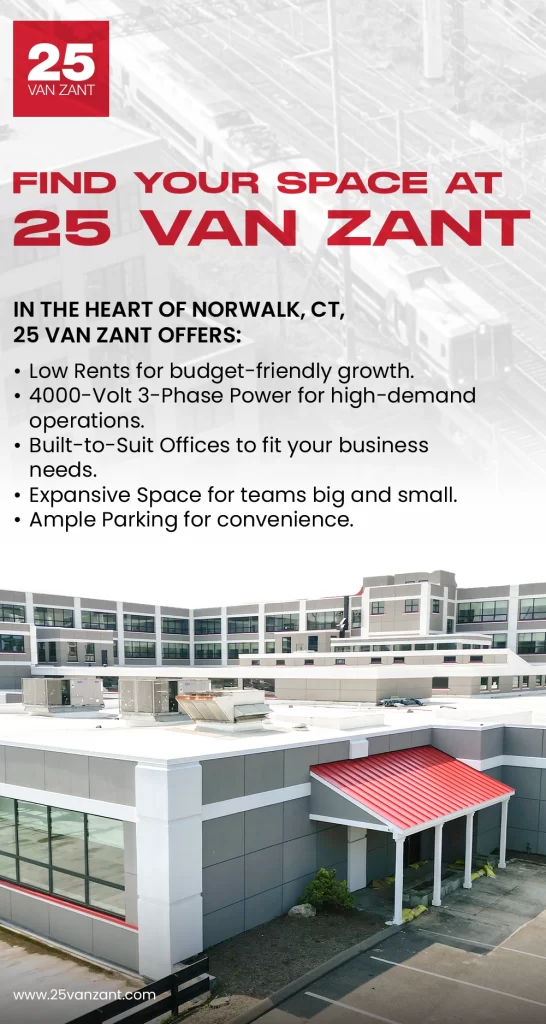
Now you may think about how to get a space that fully complies with the zoning laws for commercial spaces. That’s also a crucial yet smart move to make. What if we tell you we don’t have to struggle with this anymore? Yes, you heard it right, because 25 Van Zant is here to offer such spaces, which are fully compliant with the zoning laws for commercial working spaces. We have been in this business for decades and cater to a variety of businesses. Contact us to know more.
Frequently Asked Questions
How do I check if a property is zoned for a specific use?
You can check for it on the internet by checking the town’s or city’s zoning map, which is available on the municipal website or the planning department website.
What is the difference between a permitted use and a special permit?
Permitted use in a zoning district is based on how zoning and building requirements are met. And on the other hand, special permits are for the uses that are good to go but need additional review.
Should I consult a professional for commercial zoning issues?
Yes, you should always consult a professional for this because it’ll help you in making the right decision without bearing any kind of losses.