Key Points:
- Location and proper accessibility are major factors that contribute to a proper commercial property for light manufacturing.
- Always look for the zoning requirements before getting a commercial space for light manufacturing.
- Never overlook floor loading and ceiling height before getting a commercial space.
Introduction
You have to understand that commercial space for light manufacturing isn’t just about having a roof overhead and the desired square footage. It is very important for efficient business operations, scalability, and making it more profitable.
Whether you are planning to start a boutique fabrication shop, scale a packaging business, or optimize an assembly business, that’s why choosing the right commercial space is important, and it can make or break the manufacturing success for your business. You can also know about growing industries in norwalk ct.
To know more about it, you have to read this blog by the end. In this piece, we have talked about how to choose the right manufacturing space for your business.
What exactly is Light Manufacturing?
Low level products manufacturing refers to small or mid-sized businesses that work for small and medium-scale operations. Unlike heavy manufacturing, these do not deal with the use of heavy machines, large-scale operations, or even the urban manufacturing opportunities.
Important Characteristics of Light Manufacturing
- Minimal consumption of energy.
- Smaller to moderate levels of tools.
- Less intensive labor methods.
- Low chemical and environmental footprint.
- Faster completion times.
What Makes a Commercial Space Perfect for Light Manufacturing?
Let’s see the factors that contribute to the best commercial space for small manufacturing:
1. Location and Accessibility
Transportation Access:
The best commercial space should be located near major transportation routes, including highways, freight routes, and intermodal hubs. This way, the logistical costs can be reduced, and deliveries can be sped up. When easy access is granted to highways, ports, or rail lines, make sure smoother inbound materials and outbound products can be delivered.
Worker Commute and Supplier Access:
Your employees need to arrive on time. Similarly, suppliers need to arrive at the site on time, especially without the need for too much travel. This will keep the inventory flow smooth and prevent disruptions.
2. Zoning and Regulatory Compliance
To make a business successful, a proper understanding of local zoning laws is very important. Just when you think that this space is perfect, come to know that it’s zoned for office or retail use, but not for light manufacturing.
Important Points for the Suitability of Zoning:
- Check for the city or county zoning designations.
- Look for the specific overlays for industries.
- Make sure it’s compliant with the environmental guidelines.
- Evaluate noise, odor, and traffic restrictions.
3. Considerations for Ceiling Height and Structure
The next thing that matters the most is floor space. Vertical space is also of equal importance.
The right ceiling height helps in:
- Installation of mezzanines
- Material hoists
- Large equipment clearance
- Overhead conveyor facilities
What’s the ideal ceiling height?
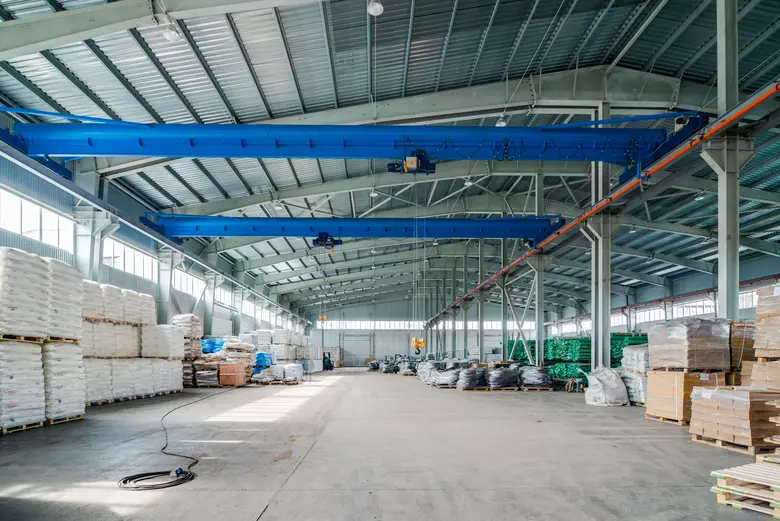
The ideal height is 16-18 feet. But, you have to remember that if automation or storage optimization is needed, the successful light manufacturing facilities often exceed this standard.
4. Never Ignore the Floor Load Capacity
Manufacturing floors should always support the heavy tools and machines, storage racks, and raw materials.
Breakdown:
- Retail or office flooring should be able to support 40-50 pounds per square foot.
- Manufacturing floors are usually able to bear 125–250+ pounds per square foot.
Often, this gets overlooked until finally operational stress tests show the need for expensive structural upgrades.
5. Electricity and Utility Infrastructure
Do you know that reliable power and usage support directly affect the quality and uptime of production?
Considerations for the electricity:
- Enough amperage and voltage.
- Separate circuits for machinery.
- Availability of options for emergency backup.
Insufficient or poor electrical infrastructure can cause machine breakdowns, downtime, and even safety hazards.
Features of a Good Light Manufacturing Building
Future-proof connectivity
Fiber connectivity, IoT (Internet of Things) readiness, and automation support are becoming the new expectations.
Modular Work Zones
Spaces that help with flexible rearrangements, which keep the operations agile.
Redundancy in Power Systems
Backup power helps to decrease downtime and save the integrity of the product.
Community and Supplier Ecosystems
Locating close to the supply clusters even helps in providing the logistics benefits and smaller lead times.
Conclusion
When you are looking forward to getting a commercial space for a small unit, always think beyond getting square footage. Certain factors play an important part in the evaluation, like operational potential, compliance, scalability, and much more to name. Always remember, businesses that consider real estate more than just an expense.
Whenever you are about to look for a light manufacturing space for rent in Norwalk CT, it’s better to look for features like better connectivity, modular work zones, redundant power systems, and more.
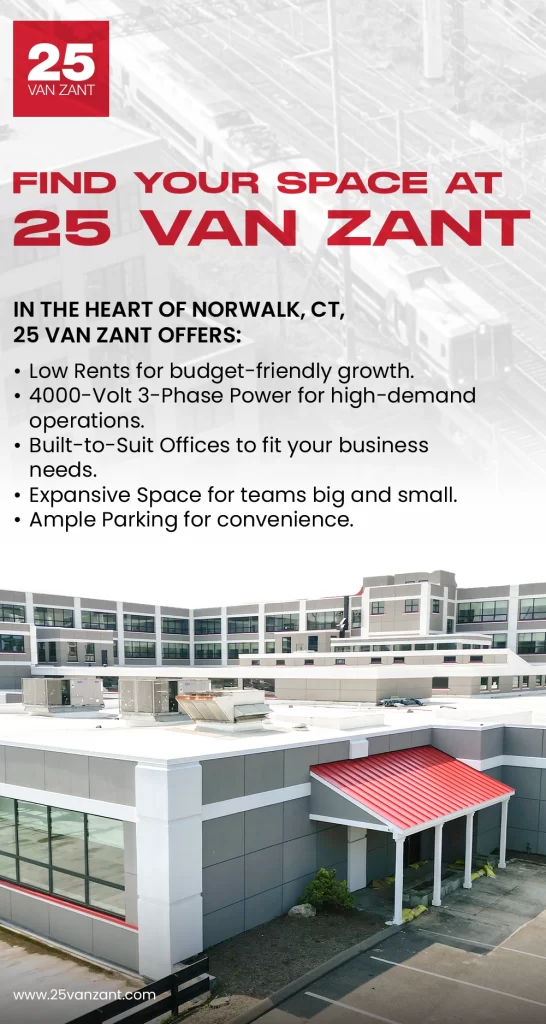
If you want the same commercial property for light manufacturing in CT, you don’t have to look around when 25 Van Zant is here to offer the best. Don’t be late, instead call now and book the space for your light manufacturing business!
Frequently Asked Questions
What are light commercial buildings?
These buildings serve the light Commercial construction, which involves the smaller-scale business construction like offices, restaurants, and small medical facilities.
What is Light Industrial Manufacturing?
It refers to running a business on a smaller scale as compared to heavy manufacturing, ensuring that products are made in smaller batches.
Is layout flexibility important in a light manufacturing space?
Yes, it’s non-negotiable. Because a properly designed space helps to adjust the workflow, the addition of new machines or reconfiguring production without any major construction.