
Picture this. You found the perfect building. The price is right, and the location is even better. But then zoning says no. Just like this, your plan stalls. This happens more often than you think. Manufacturing businesses in Norwalk face this often.
But no need to worry, as there’s good news. Zoning laws aren’t random. They follow clear rules. You just have to understand them properly. They become a roadmap. This guide breaks down Norwalk zoning laws for light manufacturing.
Why Zoning Matters So Much in Norwalk
Norwalk has grown fast over the years. Homes, offices, and factories now sit close together. That mix creates tension. The city needs manufacturing space. But it also needs to protect its neighborhoods.
So Norwalk built a zoning system to balance both. This system decides where you can build. It decides what you can produce. Skip this step, and your project stops before it starts. You should understand it in depth to save your time and money.
Understanding Norwalk’s Industrial Zones
Norwalk’s zoning code splits industrial land into different categories. Each one allows different levels of activity. Here’s a simple breakdown.
| Zone Type | What It Allows | Best For |
|---|---|---|
| Industrial No. 1 | Manufacturing, warehousing, office, and some housing | General light manufacturing |
| Light Industrial No. 2 | Light manufacturing only, with limited exceptions | Small-scale production facilities |
| Mixed-Use Light Industrial/Commercial | Light manufacturing, plus research and limited warehousing | Businesses blending office and production |
| Mixed-Use Artisan | Boutique manufacturing, bakeries, and studios | Small artisan or craft producers |
Industrial No. 1 zones exist to support manufacturing and related uses. These zones also allow warehouse space, office space, and even some housing. Heavy industrial uses need a special permit here. The goal is simple. Keep the area productive without overwhelming nearby residents.
Light Industrial No. 2 zones are stricter. In most cases, light manufacturing is the only use allowed. This zone type keeps things focused and low-impact. It works well for smaller operations that don’t need extra frills like retail space.
What Counts as Light Manufacturing
Not every production business fits the same box. Norwalk looks closely at scale and impact. Light manufacturing usually means smaller operations. Think assembly work, food production, or craft goods.
Heavy industrial activity, like large-scale processing, falls under different rules entirely. Knowing which category your business falls into changes everything. It affects your permit type. It affects your allowed zone. It even affects your parking requirements.
Key Norwalk Zoning Requirements for Manufacturers
Before you sign a lease or buy property, check these boxes first.
- Confirm the zone matches your intended use
- Check lot size and building bulk limits
- Review parking and loading requirements
- Look into signage rules for your building
- Check for any overlay districts or village district rules
- Confirm accessory use limits, like retail sales on-site
That last point matters more than people expect. Norwalk allows some retail sales tied to manufacturing. But it’s capped. Retail tied to your production can’t pass ten percent of your space. Go over that, and you may need a different approval altogether.
The Manufacturing Facility Zoning Approval Process
Getting approved isn’t one single step. It’s a sequence. Miss one piece, and the whole timeline slips. Here’s how the process generally works in Norwalk.
- Confirm your zoning designation. Use the city’s zoning map or call the Planning & Zoning Department directly.
- Determine your permit type. Some projects only need a zoning permit. Others require site plan review or a special permit.
- Prepare your application materials. This usually includes site plans, building plans, and sometimes a land survey.
- Submit to the Planning & Zoning Department. Applications go to Room 129 at City Hall.
- Notify nearby property owners. For special permits, owners within 100 feet must get written notice.
- Attend the public hearing, if required. Some site plan reviews skip this. Special permits usually don’t.
- Receive your decision. Approved applications get filed on the land records.
- Move to building permits. Zoning approval doesn’t mean construction can start yet.
That last step trips people up constantly. A zoning permit is not a building permit. You need both before construction begins.
Special Permit vs. Site Plan Review
These two terms get mixed up all the time. But they aren’t the same thing.
| Feature | Special Permit | Site Plan Review |
|---|---|---|
| Public hearing | Usually required | Often discretionary |
| Neighbor notification | Required within 100 feet | Not always required |
| Best for | Uses with more impact | Uses that fit zoning as-is |
| Review body | Planning & Zoning Commission | Planning & Zoning Commission |
If your use is already permitted outright in your zone, site plan review is often enough. If your use needs extra scrutiny, expect a special permit process instead.
Common Roadblocks Manufacturing Businesses Hit
Even experienced business owners get tripped up. Here are the usual suspects.
- Choosing a property before checking the zone
- Underestimating parking or loading dock requirements
- Ignoring nearby residential buffers
- Assuming all manufacturing types are treated equally
- Skipping early conversations with city planning staff
Norwalk’s zones sit close to residential streets in many areas. That means buffers, screening, and noise control matter a lot. Skip that planning step, and approval can drag on for months.
Tips to Make Your Approval Smoother
- Talk to the Planning & Zoning staff before you apply
- Bring a complete, accurate site plan the first time
- Address parking early, not as an afterthought
- Keep neighbors informed to avoid pushback at hearings
- Build extra time into your timeline for review cycles
Manufacturers who plan almost always move faster through the system. The ones who rush end up circling back for missing paperwork.
Final Thoughts
Zoning doesn’t have to feel like a maze. Once you know the zones, the permits, and the process, everything gets clearer. Norwalk wants manufacturing to succeed here. The rules just make sure it fits the neighborhood, too. Take the time to research your zone. Talk to city staff early.
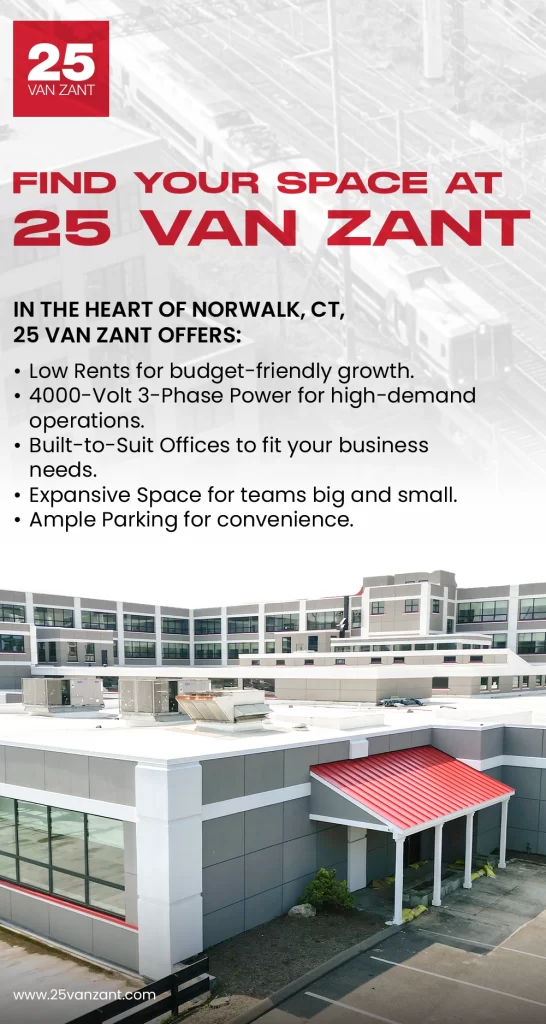
Build your timeline with approval steps in mind. That’s how smart manufacturers move forward without delays. In case you want a place without bearing any of these consequences for your business, 25 Van Zant is here to cater to your needs. To know more, contact us right away.
Frequently Asked Questions
Do I need a special permit for light manufacturing in Norwalk?
It depends on your zone. Some uses are allowed outright. Others need a special permit, especially in mixed-use or business zones.
How long does zoning approval take in Norwalk?
Timelines vary by project. Site plan review can move faster. Special permits take longer due to public hearing requirements.
What’s the difference between a zoning permit and a building permit?
A zoning permit confirms your use fits the zone. A building permit allows actual construction. You’ll need both, in that order.